We have just got back a four-day escape to the Lake District. The idea was to celebrate mine and K's birthdays (which, believe it or not, were on Friday and Saturday respectively) at the top of some large mountain or other, but as I'm sure you all will have worked out by now, it rained. And then it rained some more. Finally, there was some rain, and all thoughts of climbing even fairly small mountains were shelved in favour of rather more modest rambles.
Being the intrepid lasses we are, we did manage a few smaller walks despite the endless downpours. I reckoned that it was an important step on K's path to genuine Britishness that she was heard to utter the words 'I think it might be getting brighter' on beholding a patch of sky that was a slightly lighter shade of grey and that she donned waterproofs and set out on a two hour walk even though it was already raining and showed absolutely no signs of letting up. Who needs a citizenship test? While we we on these slightly soggy walks, we met quite a lot of sheep.

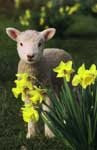
These sheep are Herdwicks, the traditional breed of the Cumberland and Westmorland fells. Uk readers may remember that they were hit particularly hard by the foot and mouth epidemic of 2001, not only because Cumbria was badly affected but because each flock is 'heafed' to a particular patch of mountainside, meaning that the farmers can allow them to graze freely after they have lambed in the Spring without having to worrying that they will end up somewhere they shouldn't be. Personally, I am incredibly glad that Herdwicks are still prevalent in Cumbria. Those who complain about British farmers (and I'm not saying that such complaints are always unreasonable) should still remember that they do a lot of invisible work in keeping the landscape looking the way it does - I for one do not especially want a Lake District covered in birch scrub. In any case, they are an attractive breed and very much part of traditional Cumbrian heritage. And I'm told they taste nice.
There is only one problem; they are completely uneconomical to keep. They are bred mostly for their meat, but since they only have one lamb, it is hard for them to compete with other upland breeds like Swaledales which reliably have two lambs even in fairly harsh conditions. Their wool, although extremely hardy and warm, is practically unused, to the extent a few years ago, the British Wool association offered to pay farmers a penny a kilo for their wool 'as a goodwill gesture'. People want mohair and cashmere, apparently, and the only reason that Herdwicks ultimate survive as a commercial breed is because of government grants and because many of the farms are owned by the National Trust and are obliged, thanks to Beatrix Potter (a well-known Cumbrian sheep-farmer), to keep Herdwicks on their land.
But what about people who like scratchy, smelly wool? I admit that this is not to everyone's taste, but as readers of earlier posts might have noticed, I actually like the kind of wool that still looks and smells like it once belonged to a sheep, and there's nothing like a slightly scratchy and hard-wearing jumper for a day in the garden, a Sunday afternoon welly walk or just an afternoon curled up in front of the fire with a cup of tea. I was therefore extremely pleased to discover another new range of 'plain' wools on a rainy Saturday morning in Keswick. To my mind, these are even better than Sirdar's eco-wool, because they are produced from exactly those British breeds that struggle to find a market for their wool - including Herdwicks!
So for anyone else out there who doesn't mind a few tickles in their jumpers, allow me to recommend these to you. Not only these yarns plain, simple and hard-wearing, but they help Cumbrian farmers keep their beautiful landscape exactly as it is known and loved.
Now all I need to do is to find a decently plain knitting pattern to match...